(English version below)
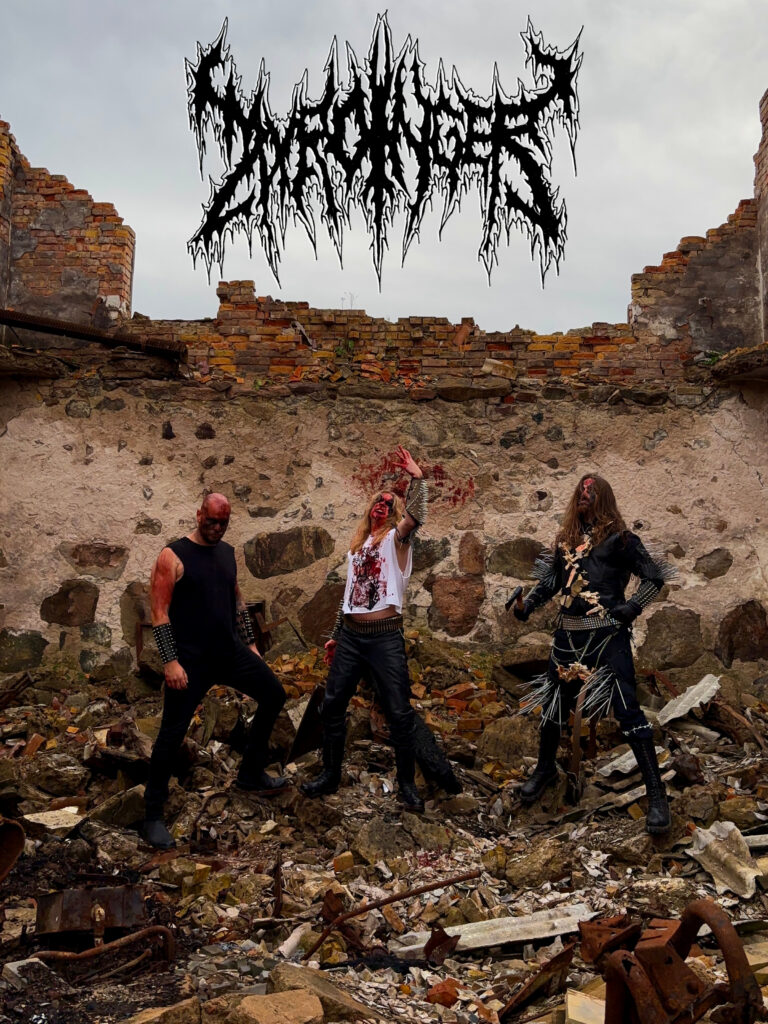
Uit de zuidelijke ruïnes van Zweden rijst een nieuwe naam, gevormd in vuur en instinct. Myrdinger verscheen zonder voorteken of afkomst, en hanteert chaos als wapen en als gebed. Hun debuut Wrath’s Obliteration is een manifestatie van woede, melancholie en geloof die samensmelten tot één hartslag.
In dit gesprek spreekt het trio vanuit dat vuur, over kwelling, over mythologie, over de breuklijn tussen vlees en devotie.
Elk woord brandt, elke stilte ademt ritueel.
Myrdinger verscheen plotseling, zonder waarschuwing. Welke krachten schuilen achter deze entiteit, en hoe is dit vuur ontstoken?
Myrdinger is niet zomaar een extreme band. Wij verrijzen uit totale duisternis en ruïnes. We brengen het plotselinge gevoel over van een denkbeeldige scherpe dolk die de ziel opensnijdt in chaotische verwarring, via onze muziek. De krachten en de vlam verschenen om over te brengen wat in de blackmetalscène lang verloren is gegaan. Veel ervan is eentonig geworden, heeft zijn fundament verloren, is de verkeerde richting uitgegaan, overgeproduceerd en gevuld met volkomen irrelevante boodschappen. Veel bands brengen nummers uit zolang er maar mineurakkoorden, blasts en geschreeuw in zitten. Het oorspronkelijke gevoel is volledig verdwenen. Dan voegen ze er een zwart-witte hoes aan toe omdat ze niet genoeg duisternis kunnen oproepen. Het wordt een grote mainstreampap. Wij proberen de oude stijl te behouden, maar op een doordachte en vernieuwende manier.
Wrath’s Obliteration ademt tegelijk precisie en chaos. Was er vanaf het begin een duidelijk plan, of groeide het album instinctief uit woede en intuïtie?
Het album is een vertolking van gevoelens van duisternis, verdoemenis en chaos. Al lange tijd hadden we het gevoel dat bepaalde emoties moesten worden overgebracht: chaos, haat en andere. Ze zijn getransformeerd in muziek, riffs, brute tempo’s, melodieën en geschreeuw. Sommige delen ontstonden natuurlijk, andere werden vaak herwerkt en herschapen.
Jullie spraken over het brengen van ‘solid brutal hate’, maar ook van melancholie. Hoe bestaan die twee krachten naast elkaar in jullie muziek?
De boodschap van de nummers wordt ritmisch uitgedrukt in de zang en overgebracht door de riffs, die de klank voortstuwen. Sommige gevoelens komen als een slag, andere trekken naar melancholie. Dat blijft subjectief voor de luisteraar. Elk nummer draagt zijn eigen boodschap, en elk deel is daarin gesymboliseerd door de manier waarop de muziek wordt uitgevoerd. Om de aandacht vast te houden, maar vooral voor onszelf, moet de structuur dynamisch en gevarieerd blijven. In elk nummer vind je melancholische passages en krachtige riffmomenten.
Met geen eerdere bands op jullie naam voelt Wrath’s Obliteration aan als een eerste bezwering, geen debuut. Wou jullie dat het volledig gevormd klonk, of was dit eenvoudigweg de enige manier waarop jullie je konden uitdrukken?
Hellstorm speelde vroeger in een deathmetalband die twee albums en twee ep’s uitbracht. Myrding en Acfernius bespeelden verschillende instrumenten in uiteenlopende stijlen. Ze wilden dit album al lang tot leven brengen, maar veel in het leven hield hen tegen om de nummers af te werken en op te nemen. We hebben weinig interesse om over het verleden te spreken.
Het album is voorlopig enkel digitaal verkrijgbaar. Zien jullie dit als een eerste manifestatie die een fysieke vorm nodig heeft om echt te ademen?
Ja. De cd’s zijn besteld en worden op dit moment geperst. Ze zullen verkrijgbaar zijn via onze Bandcamp, via directe berichten en bij optredens.
De klank van Wrath’s Obliteration is pure vernietiging, maar draagt tegelijk iets spiritueels. Zit er een rituele toestand achter het schrijfproces, of komt alles voort uit de hitte van emotie?
Van het creëren tot de opname via de versterkers komt alles voort uit zuivere gevoelens. We wilden echt een klank vinden die past bij de oude school, doordrenkt van haat en de volle kracht van emotie. De rituele toestand is eerder een vorm van waanzin en chaos die zich in onze geest kan openbaren.
Veel van jullie teksten bewegen tussen mythologie en marteling, tussen oude visioenen en lichamelijk lijden. Wat trekt jullie naar die werelden — fascinatie, reflectie of iets dat dichter bij geloof ligt?
De wereld, de mens, levend en dood. Velen van ons hebben geschiedenis gemaakt via psychische en fysieke marteling. Trauma is subjectief, en veel mensen hebben geen echt trauma meegemaakt. Misschien ‘geloof’ in de zin van verloren hoop. De gevoelens die wij uitdrukken sluiten vaak aan bij de muziek zelf.
Nummers als Crowded of Souls en Bloody Resignation gaan over tocht en erfenis. Zien jullie het album als één reis van leven naar openbaring, of als fragmenten van dezelfde vloek?
“Crowded of Souls” gaat over de rivier Styx, de overtocht van zielen. “Bloody Resignation” gaat over Cronus, de leider van de titanen, die zijn kinderen opeet om zijn troon te behouden. We wilden over hem schrijven omdat dat bizarre verhaal perfect past bij de muziek.
Griekse mythologie is duidelijk aanwezig, van de Acheron tot de Titanen. Hoe verbinden jullie die oeroude symbolen met de moderne wereld van verval waarin we leven?
Acheron kan worden gezien als het middel waarmee mensen ook vandaag nog snel naar het rijk van de dood worden overgebracht. De grens tussen leven en dood is dun, en de symboliek van Charon bepaalt wie die grens mag oversteken. Titanen bestaan vandaag nog altijd, in andere vormen. Het zijn machtige krachten die altijd aanwezig waren, nog voor er samenlevingen bestonden. Ze zijn machtiger dan ooit, veroorzaken lijden op lange termijn. Sommigen zijn zichtbaar, anderen blijven verborgen.
Purging Darkness voelt als een ritueel van zelfverbranding, met as, bloed en offer. Was dit nummer bedoeld als zuivering of als ultieme overgave?
Eigenlijk wel, goed opgemerkt. En met de daaropvolgende “Dawn of Obliteration” kan het misschien leiden naar het volgende album.
Jullie noemen het album bruut en dynamisch. Hoe bewust zijn jullie van structuur tijdens het schrijven? Ontstaat het uit orde of uit trance?
Dat verschilt. Soms begint het met één idee, soms met het volledige beeld. Veel nummers zijn vaak herzien en opnieuw opgebouwd. We maken demo’s, luisteren en bespreken tot we het eens zijn over de structuur. We breken graag regels en denken buiten de vaste kaders om het gewenste resultaat te bereiken. “Dilapidated Shadow” had vanaf het begin een vaste vorm, maar “Crowded of Souls” is talloze keren herwerkt.
De drums klinken bezeten, de bas leeft. Hoe werken jullie samen om zo’n meedogenloze energie vast te leggen — instinct, repetitie of volledige overgave?
Hellstorm is een beest, technisch sterk en ervaren. We zijn de tel kwijtgeraakt van hoeveel drumstokken hij brak tijdens de opnames. Voor elk nummer maakten we een demo zodat we precies wisten hoe het moest klinken en worden uitgevoerd. Myrding en Acfernius brengen vaak verschillende ideeën en gevoelens aan die de structuur vormgeven. We combineren de waanzin van kracht bij het schrijven, maar beperken ons soms om niet te verdrinken in te lange nummers of te veel riffs. We namen op toen de songs klaar waren en onze kracht op haar hoogst was, om het juiste gevoel over te brengen.
Welke emotie vormt de kern van Myrdinger — woede, verdriet, toewijding of de leegte zelf?
Een mengeling van gevoelens. We schreven de muziek vanuit frustratie, kracht en haat, maar proberen ook de schoonheid te tonen die in woede kan schuilen. We moeten in de juiste gemoedstoestand schrijven, anders verwerpen we het idee. Tijdens het spelen ontstaat een bijzondere energie, vol agressieve frustratie. Sommige riffs zijn oud, zoals de hoofdriff van “Wrath’s Obliteration”, die ontstond in een moment van pure woede. De beste riffs komen voort uit samengebalde emotie.
Zweedse black metal heeft vele gezichten. Waar plaatsen jullie jezelf in die lijn, of verwerpen jullie elke vorm van inpassing?
Moeilijke vraag. Zeker niet bij de nieuwe, monotone stromingen. Maar ook niet bij de oorspronkelijke grondleggers. Eerder ergens tussen de late jaren tachtig en het begin van de jaren negentig. We komen uit Zuid-Zweden, waar ook Ultra Silvam vandaan komt. Misschien hebben we ons eigen soort Scania Black Metal.
De titel Wrath’s Obliteration suggereert dat woede meer is dan razernij, dat het een zuiverende kracht kan zijn. Wat betekent woede voor jullie op spiritueel vlak?
Een mooie gedachte, maar het nummer zelf zegt het eigenlijk. De diepere betekenis van de vernietiging die uit woede ontstaat, laten we over aan de luisteraar. Zowel woede als vernietiging kunnen subjectief worden ervaren. Innerlijke psychologische woede en haar fysieke vernietiging kunnen zich op verschillende manieren uiten, op verschillende momenten.
Hoe zien jullie de teksten — als vertelling, bezwering of bekentenis? Zijn ze schepping of zuivering?
De teksten zijn afgestemd op elk nummer en op elk deel daarvan, zorgvuldig opgebouwd om te passen bij het geheel. Sommige zijn verhalend, andere bestaan uit metaforen. Er zit woede in machteloosheid, en afdaling in psychologische en fysieke marteling. Zowel bezwering als bekentenis zijn passende woorden om die emoties te vatten.
Wat willen jullie dat er bij de luisteraar achterblijft na de laatste stilte van Dawn of Obliteration?
We hopen dat ze de sfeer van het album voelen en zich ermee kunnen verbinden. Dat ze even pauzeren, het laten bezinken en opnieuw luisteren. Het album moet meerdere keren worden gehoord om de essentie echt te laten doordringen. Het einde van “Dawn of Obliteration” wordt gespeeld door Acfernius op de Zweedse nyckelharpa, een traditioneel instrument. Het symboliseert zowel de Zweedse volksziel als de sombere toon die het einde markeert.
Wat brandt er nu verder voor Myrdinger? Is dit het begin van een grotere manifestatie, of laten jullie de as nog even spreken?
We gaan een aantal optredens spelen. We willen het album even laten ademen. Tegelijk werken we aan nieuw materiaal dat hopelijk de industrie zal opblazen. Het zal tonen hoe extreme metal hoort te klinken, uitgedrukt met onze blijvende woede.
⸸ Blackie ⸸
English version
Myrdinger Interview – From The Southern Night Of Sweden (2025)
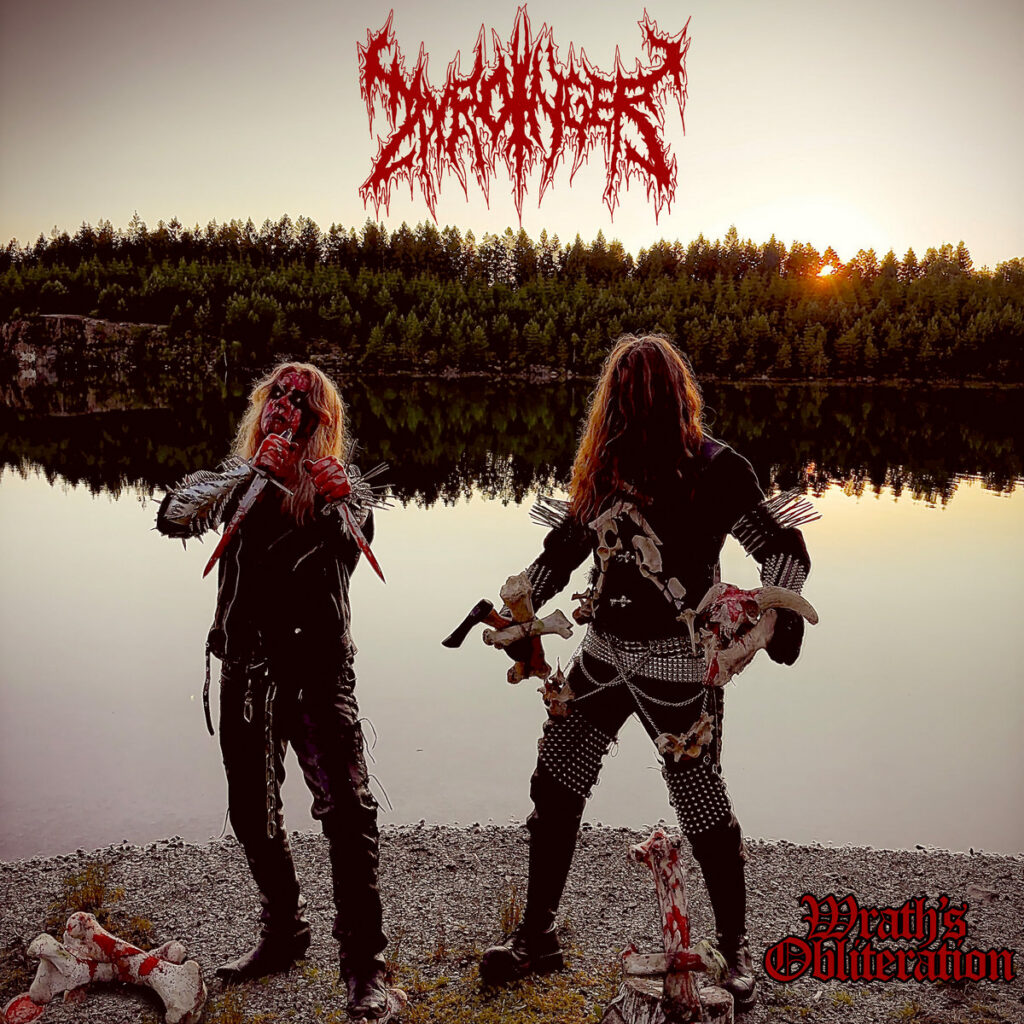
From the southern ruins of Sweden rises a new name, carved in fire and instinct. Myrdinger appeared without omen or ancestry, wielding chaos as both blade and sermon. Their debut Wrath’s Obliteration is a manifestation of fury, melancholy and faith fused into one pulse.
In this dialogue the trio speaks from within that fire, of torment, of mythology, of the fracture between flesh and devotion.
Every word burns, every silence breathes ritual.
Myrdinger appeared suddenly, without warning. Who are the forces behind this entity, and how did this flame begin to burn?
Myrdinger is not just an extreme band, we rise from total darkness and ruins. We mediate the abrupt feeling of an imaginary sharp razor dagger ripping the soul apart with chaotic confusion, by dint of our music. The forces and flame appeared to convey what has been forgotten for a long time in the black metal scene. Much today has become monotonous, lost its ground under the feet, in the wrong direction, overproduced and singing about completely irrelevant messages. In combination with the fact that many bands release songs as long as they have some minor chords, blasts and screams. The original feeling has been completely lost. Then an album cover, which of course is black and white will be added because they can’t convey enough darkness… It becomes a big mainstream soup. We are trying to keep the old style, but still being innovative in a deeply thoughtful way.
Wrath’s Obliteration strikes with both precision and chaos. Was there a clear vision from the beginning, or did the album grow instinctively from rage and intuition?
The album is an intermediation of feelings from darkness, perdition and chaos. For a long time, we have had an intuition about different emotions that should be conveyed. Chaos, hate, among other feelings. It has been transformed through the music, riffs, brutal tempos, melodies and the screams. Some parts have been created naturally, others have been processed and redone many times.
You mentioned wanting to bring “solid brutal hate” but also melancholy. How do those two energies coexist within your music?
The message in the songs is described rhythmically through vocals and conveyed by riffs, and rip the collection of tones forward. Some feelings are created as a punch, and some in a melancholic direction, it is subjectively up to the listener to define. Each song has its own message, with each part symbolized in the music’s performance. To maintain interest among the listeners, but most importantly for us, the song structure must be dynamic and varied. Take any song you want, you will find some melancholic parts and some solid riff parts.
With no previous bands listed under your names, Wrath’s Obliteration feels like a first invocation rather than a debut. Did you intend it to sound fully formed, or was it simply the only way you could express yourselves?
Hellstorm has played in a Death metal band before, which has released 2 albums and 2 EPs. Myrding and Acfernius have played different instruments and different music styles. They wanted to bring this album to life for a long time, but many things in life have prevented them from having the opportunity to complete and record the songs. We are not very interested in informing the past.
The record is currently digital only. Do you see it as a first manifestation that demands physical form, tape, vinyl, to truly breathe?
Yes, CDs are ordered and are currently in production. They will be available to purchase through our Bandcamp, direct message or upcoming shows.
The sound of Wrath’s Obliteration is pure violence yet strangely spiritual. Is there a ritualistic state behind your creation process, or does it emerge from the heat of emotion alone?
The sound from music creation to actual recording through the amplifiers comes from pure feelings. We really wanted to find a sound that fits the old-school sound, encompassing hate and total power of emotions. The ritualistic state is more about insanity and chaos that can appear in our minds.
Many of your lyrics move between myth and torment, between ancient visions and fleshly suffering. What draws you toward those worlds, is it fascination, reflection, or something closer to faith?
The world, humans, alive and dead. Many of us have made history through both psychological torture and physical suffering. Trauma is a subjective assessment and many have not experienced real trauma. Perhaps “faith” in case of lost hope. As we have mentioned and will mention more below, many of the expressed feelings align with the music.
Songs such as Crowded of Souls and Bloody Resignation speak of journey and inheritance. Do you see the album as a single passage, from life into revelation, or as fragments of the same curse?
“Crowded of Souls” is about the flood, The Styx. Bloody Resignation is about Cronus, the leader of the titans, who eats his children to retain the throne. We want to write about him because of the bizarre story that fits the music.
There is a strong presence of Greek mythology, from the Acheron to the Titans. How do those ancient symbols connect to the modern world of decay that surrounds you?
Acheron can be described as a swift means by which humans are transferred to the realm of death even today. The limit between life and death is very close and the symbolism of Charon decides who enters the realm of death, think about that for a moment. Titans today are powerful forces that have always existed in our societies, and even before societies existed. They are more powerful today than ever in history, they can cause suffering in a long-term way. Some are figureheads and some fly under the radar.
Purging Darkness feels almost like a self-immolation ritual, ashes, blood, offering. Was this song meant as purification or as final surrender?
Actually yes, nice you found it out. With the following Dawn of Obliteration, it may lead to the next album.
You have described the album as both brutal and dynamic. How conscious are you of structure when composing? Do you write through order or through trance?
It differs, some start with an idea and others have the whole picture in the beginning. Many of the songs have undergone many revisions. We record demos, listen and come up with different points of view until we agree on the structure. We must break the rules and think outside the box to achieve our optimal result. An example is “Dilapidated Shadow”, which had a clear structure from the beginning, but “Crowded of Souls” has been totally remade many times.
The drumming feels possessed, the bass alive. How do you work together when recording such relentless energy, instinct, rehearsal, or complete abandon?
Hellstorm is hell of a monster, well-skilled and experienced in drumming. We lost count of how many drumsticks he destroyed during recording. We made demos for every song so we had a clear vision of how it should sound and be performed. Myrding and Acfernius often bring different ideas and feelings that shape the song’s structure. We need to combine the insanity of power when writing but still sometimes limit ourselves before it kills us with a too long song, too many riffs or parts. We recorded when we were finished with the songs and in our most powerful mood to convey the intended feeling.
What emotion lies at the centre of Myrdinger, anger, sorrow, devotion, or the void itself?
Assorted feelings. We wrote the music based on frustration, power and hate, but still tried to explain the beauty in the natural anger. We must write our music in the appropriate mode of powerfulness and creativity, otherwise we will just scrap the ideas. When performing the songs, a special powerful feeling arises, filled with aggressive frustration. Some riffs are old, such as the main riff in the song “Wrath’s Obliteration”, which was written in a frustrated condition. The best riffs usually appear when a bunch of emotions arise.
Black metal in Sweden has many faces. Where do you place yourselves in that lineage, or do you reject belonging altogether?
Hard question. Certainly not among the new style of monotonous melodies. But neither among the real OG’s. Perhaps around the late ‘80s and the beginning of the ‘90s extreme metal. We are from southern Sweden where Ultra Silvam is also from, perhaps we have our own type of Scania Black Metal?
The title Wrath’s Obliteration suggests that wrath is not just rage but a cleansing force. What does wrath mean to you on a spiritual level?
Nice thought though, but the title track is really about what it means. The deeper thought about the specified obliteration, which appeared from wrath is up to the reader. Based on the resisting lyrics. Both wrath and obliteration can be subjectively perceived. The inner psychological wrath and its physical obliteration can arise in various ways, at different times.
How do you view your lyrics, as storytelling, invocation, or confession? Are they tools of creation or exorcism?
The lyrics are tailored to each song and its respective parts, every part carefully crafted to match. Some are storytelling, others consist of many metaphors. Anger in the impotence and deep diving into the psychological aspects, such as physical torture. Invocation and confession are also appropriate synonyms for conveying emotions.
When listeners enter this album, what do you hope stays with them after the final silence of Dawn of Obliteration?
We hope they catch the feeling of the album and can relate. They could pause for a while, let it sink in and then listen to it again. The album needs to be heard a few times to really let the feeling sink in. The end of the song Dawn of Obliteration is played by Acfernius on the Swedish instrument “Nyckelharpa” (Key-harp) and symbolizes both Swedish folk or traditional music and its gloomy tone, marking the end of the album.
What burns next for Myrdinger? Is this the beginning of a greater manifestation, or will you let the ashes speak for a while?
We are going to play a couple of gigs. We will let the album breathe for a while. But we’re working on material for a new album that we hope will blow up the industry. It will showcase how extreme metal should sound, expressed by our remaining fury.
⸸ Blackie ⸸
Conjured on November 10 2025