(English version below)
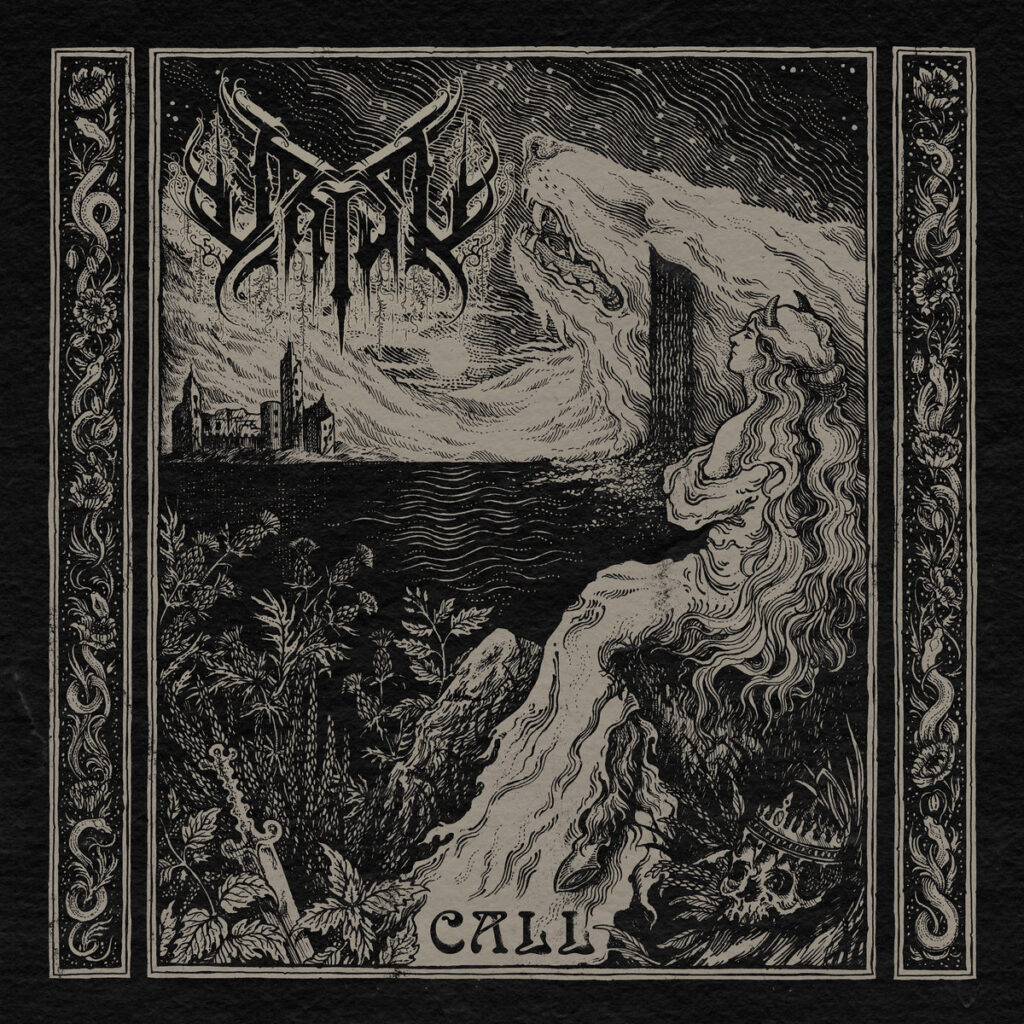
In het Duitse Bonn ontstond in 2023 Urisk, een duo dat zijn naam ontleent aan de ùruisg. Dit wezen uit de Schotse folklore, half mens en half bok, zou rondwaren bij afgelegen poelen en watervallen. Marleen Bügener en Benedikt Brixius brachten in eigen beheer twee demo’s onder de naam Oidhche en het album Shrivelling Lights uit. Voor hun tweede langspeler Call vonden ze onderdak bij Vendetta Records. Bügener schrijft de teksten en zangarrangementen en neemt alle vocalen voor haar rekening, Brixius componeert de muziek en speelt gitaren, bas, accordeon en synthesizers. Pepe Roldan Duran zit achter de drums.
De titel Call heeft een dubbele betekenis. In het Schots-Gaelisch betekent het verlies, in het Engels een roep. Urisk bezingt de teloorgang van de wildernis en haar diersoorten en legt die naast de verdringing van de Gaelische taal en cultuur. Rouw en woede lossen elkaar af, met daaronder het heimwee naar een verloren thuisland. De zang waarmee de plaat opent, keert later terug in A’ Choille Ghruamach. Beide stukken zijn gebaseerd op het gelijknamige klaaglied van de Schotse dichter John MacLean, die in 1819 naar Nova Scotia emigreerde. Een man zit alleen in een donker woud en voelt zijn liederen en zijn Gaelisch wegglijden.
Na de korte opening Ro-Ràdh: Air Chall’s Gruama barst Uprooting los met felle tremoloriffs en melodieuze gitaarlijnen. Brixius laat verschillende gitaarpartijen in elkaar grijpen. Geregeld valt de storm stil voor rustiger passages en galmende, ijle zang. Het slagwerk van Roldan Duran valt op door de vele tempowisselingen en ritmische accenten. Jaws of Dawn houdt de druk hoog, met directer gitaarwerk en minder uitgesproken contrasten. Vinnige solo’s doorbreken de aanhoudende stroom van riffs. Die onverzettelijkheid sluit aan bij de tekst, waarin de verteller gevangen zit tussen twee talen en verlangt naar een uitweg uit een omgeving die als een graf aanvoelt.
Brixius laat voortdurend nieuwe riffs opduiken, wisselt geregeld van ritme en geeft zijn gitaarwerk soms plots een veel zwaardere wending. De melodieën krijgen ruimte om zich te ontwikkelen, maar de muziek blijft zelden lang op dezelfde plaats hangen. Het samenspel met het beweeglijke drumwerk geeft de lange nummers een energie die bij atmosferische black metal lang niet vanzelfsprekend is. De synthesizers blijven doorgaans op de achtergrond en versterken de sfeer. De gitaren voeren de boventoon. Op volle snelheid blijft er aandacht voor melodie en dynamiek.
Marleen Bügener krijst met de razernij van een bezeten heks, alsof ze zich tijdens een nachtelijk ritueel volledig aan haar eigen waanzin heeft overgegeven. Haar stem is wild en ongetemd en behoudt toch een uitgesproken vrouwelijke klank. Nergens probeert ze haar stem kunstmatig te verzwaren of achter een onherkenbaar gebrul te verbergen. Haar krijsen zijn hoog, schurend en bij momenten ronduit hysterisch. Als een woedende priesteres stort ze haar vervloekingen over de wereld uit. Wanneer ze zuiver zingt, zonder franje, krijgt haar stem plots iets kwetsbaars, haast spookachtigs. Dezelfde vrouw die enkele ogenblikken voordien haar longen uit haar lijf leek te krijsen, zingt nu alsof ze een eeuwenoude klaagzang aanheft.
Het bijna tien minuten durende The Hauled and the Waif opent ingetogen, met weemoedige melodieën boven subtiele synthesizers en een heldere stem. Geleidelijk schuiven logge, vervormde gitaren naar voren en kantelt het nummer richting black doom, met trage, haast verstikkende ritmes. Vervolgens barst het nummer los in razende blastbeats en furieus gitaarwerk. De tekst volgt een terugkeer naar een gewonde zee, waar herinneringen aan een verdwenen wereld vervagen, tot het water aan het slot zelf terugkeert.
Met Night Call: To You Who Lie Buried Face to the Ground volgt het langste nummer van de plaat. Het begint bijna walsend, met folkloristisch aandoende instrumentatie, waarna dreigend gitaarwerk het overneemt. Urisk bouwt de spanning geduldig op. Slepende passages worden afgewisseld met woeste uitbarstingen, waarbij de melodieën geregeld weer bovendrijven. In de tekst worden wezens uit de Gaelische folklore bij hun naam geroepen, de ùraisgean incluis. Naast die vergeten mythische wezens duiken ook de uit het landschap verdwenen wolf, lynx en beer op. Zo groeit het nummer uit tot een aanklacht tegen de vernietiging van de wildernis. Tegen het einde wordt de muziek opnieuw ingetogen, en na al dat geweld komt die stilte hard aan.
Na het korte A’ Choille Ghruamach sluit Fògrach // Spirit Flight de plaat af, volledig in het Gaelisch gezongen. Het nummer begint furieus, met snelle drums en striemend gitaarwerk, en wisselt nadien meermaals van tempo. De tekst beschrijft een balling die na jaren van verlies de zee oversteekt, op zoek naar de weg naar huis. Onder de as blijken nog sintels te gloeien, en de woede van de eerdere nummers wijkt voor een voorzichtig verlangen naar herstel.
De productie is helder en krachtig, waardoor de gitaarlagen en synthesizers goed van elkaar te onderscheiden blijven. Brixius houdt zijn lange composities voortdurend in beweging. De aandacht verslapt nooit. Bügener geeft ze een stem die heen en weer slingert tussen heks en klaagvrouw. Met Call levert Urisk een sterke tweede langspeler af, een roep uit het sombere woud.
87/100
⸸ Blackie ⸸
English version
Urisk was formed in Bonn, Germany, in 2023, taking its name from the ùruisg, a creature from Scottish folklore, half man and half goat, said to haunt secluded pools and waterfalls. Marleen Bügener and Benedikt Brixius independently released two demos under the name Oidhche, followed by the album Shrivelling Lights. For their second full-length, Call, they found a home with Vendetta Records. Bügener writes the lyrics and vocal arrangements and handles all vocals, while Brixius composes the music and plays guitars, bass, accordion and synthesizers. Pepe Roldan Duran is behind the drums.
The title Call carries a double meaning. In Scottish Gaelic, it means loss; in English, a summons or a cry. Urisk mourns the destruction of the wilderness and its wildlife, drawing parallels with the erosion of Gaelic language and culture. Grief and anger alternate, underpinned by a longing for a lost homeland. The singing that opens the album returns later in A’ Choille Ghruamach. Both pieces are based on the lament of the same name by Scottish poet John MacLean, who emigrated to Nova Scotia in 1819. A man sits alone in a dark forest, feeling his songs and his Gaelic language slipping away.
After the brief introduction Ro-Ràdh: Air Chall’s Gruama, Uprooting erupts with fierce tremolo riffs and melodic guitar lines. Brixius weaves several guitar parts together. At regular intervals, the storm subsides, giving way to quieter passages and distant, reverberating vocals. Roldan Duran’s drumming stands out for its numerous tempo changes and rhythmic accents. Jaws of Dawn maintains the pressure, with more direct guitar work and less pronounced contrasts. Nimble solos cut through the relentless stream of riffs. That unyielding force reflects the lyrics, in which the narrator finds himself trapped between two languages, longing to escape surroundings that feel like a grave.
Brixius constantly introduces new riffs, shifts rhythms and occasionally takes his guitar work in a much heavier direction. The melodies are given room to develop, yet the music rarely stays in one place for long. Combined with the restless drumming, this gives the lengthy compositions an energy that is far from guaranteed in atmospheric black metal. The synthesizers generally remain in the background, reinforcing the atmosphere. The guitars dominate. Even at full speed, melody and dynamics receive plenty of attention.
Marleen Bügener shrieks with the fury of a possessed witch, as though she has surrendered completely to her own madness during a nocturnal ritual. Her voice is wild and untamed, yet retains a distinctly feminine quality. She never attempts to artificially deepen her voice or conceal it behind an unrecognisable growl. Her shrieks are high-pitched, abrasive and at times downright hysterical. Like an enraged priestess, she pours her curses upon the world. When she switches to clean singing, stripped of all embellishment, her voice suddenly takes on a vulnerable, almost ghostly quality. The same woman who seemed to be screaming her lungs out only moments earlier now sings as though delivering an ancient lament.
The nearly ten-minute The Hauled and the Waif begins quietly, with melancholy melodies floating above subtle synthesizers and clear vocals. Gradually, heavy, distorted guitars move to the forefront, and the song veers towards black doom, with slow, almost suffocating rhythms. Then it erupts into furious guitar work and raging blastbeats. The lyrics describe a return to a wounded sea, where memories of a vanished world begin to fade, until the water itself finally returns.
Night Call: To You Who Lie Buried Face to the Ground is the longest track on the album. It begins with an almost waltz-like rhythm and folk-inspired instrumentation before ominous guitars take over. Urisk patiently builds the tension. Slow, dragging passages alternate with savage outbursts, the melodies repeatedly rising back to the surface. The lyrics invoke creatures from Gaelic folklore by name, including the ùraisgean. Alongside these forgotten mythical beings appear the wolf, lynx and bear, animals that have also vanished from the landscape. The song develops into a condemnation of the destruction of the wilderness. Towards the end, the music grows subdued once again, and after all that violence, the silence hits hard.
Following the brief A’ Choille Ghruamach, Fògrach // Spirit Flight closes the album, sung entirely in Gaelic. The song begins furiously, with rapid drumming and lashing guitars, before shifting tempo several times. The lyrics tell of an exile who, after years of loss, crosses the sea in search of a way home. Embers are still glowing beneath the ashes, and the anger of the preceding songs gives way to a cautious longing for renewal.
The production is clear and powerful, allowing the guitar layers and synthesizers to remain distinct. Brixius keeps his lengthy compositions in constant motion. The listener’s attention never wavers. Bügener gives them a voice that swings between witch and mourning woman. With Call, Urisk delivers a strong second full-length, a cry from the dark forest.
87/100
⸸ Blackie ⸸
Under the seal of Vendetta Records
Conjured on November 1 2026